Partager
Publié le : 21 mars 2025
What is the meaning of the Jubilee ? (2/4)
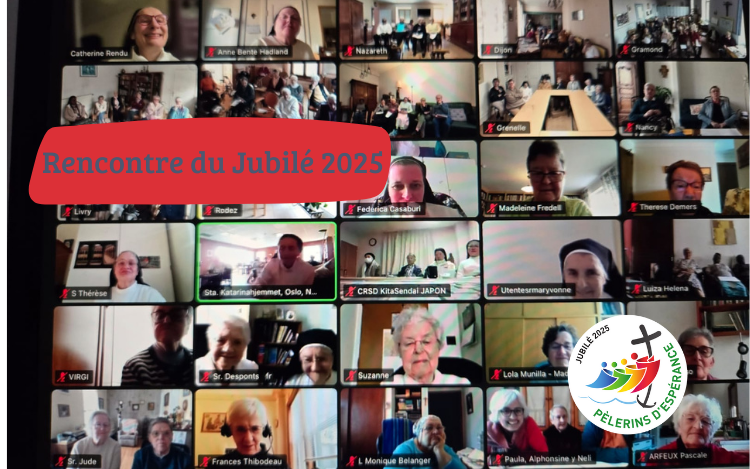


On Saturday, February 15, the sisters of the Congregation met by videoconference to celebrate the Jubilee Year !
We were more than 160 sisters from about 10 countries.
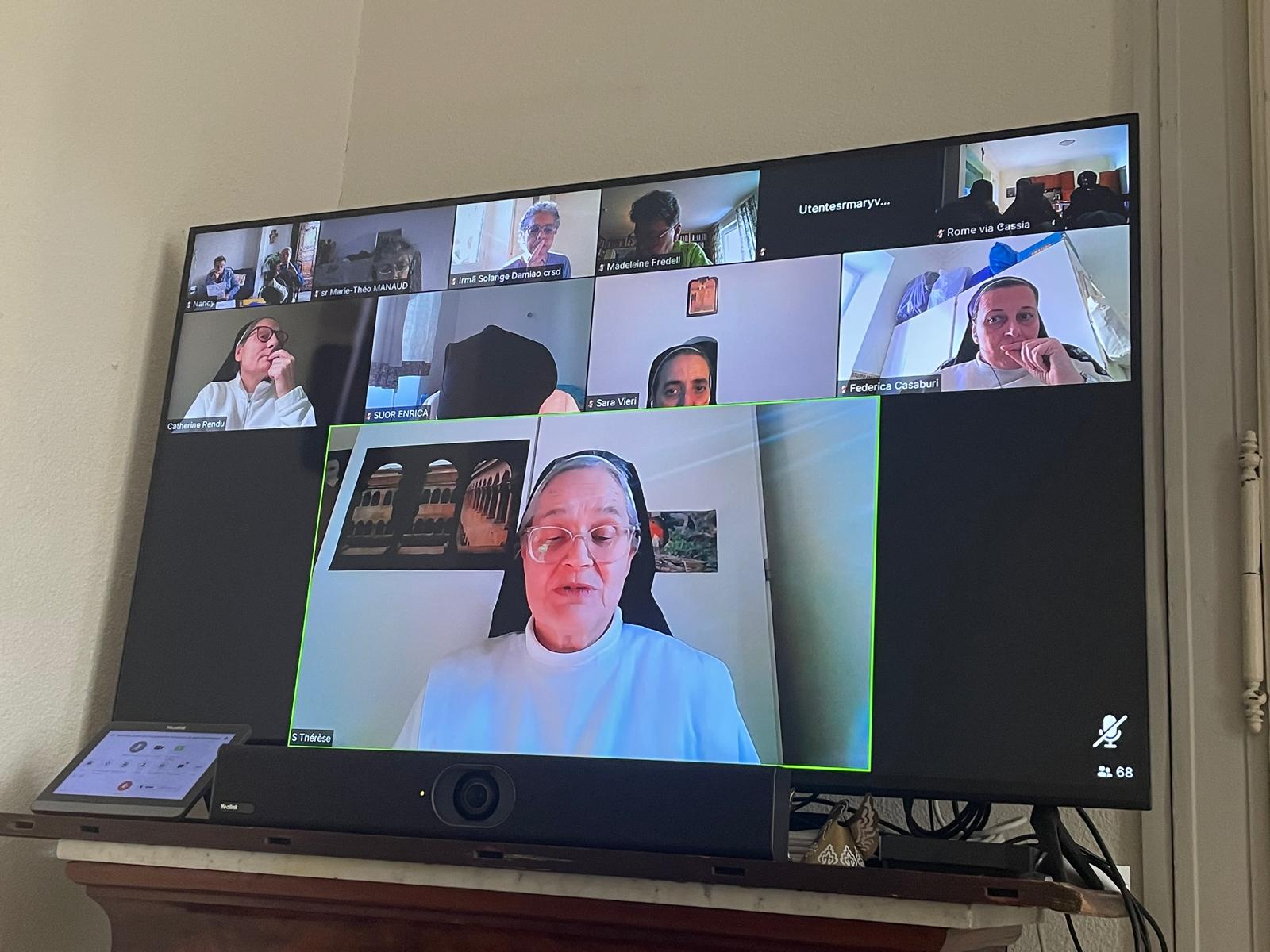
Second intervention, by our sister Thérèrs Marie Boillat from the community of Rome (Italy).
1. In the Catholic Church, how did the first Jubilee begin ?
As you know, every 25 years, the Church celebrates a Jubilee. But since when ?
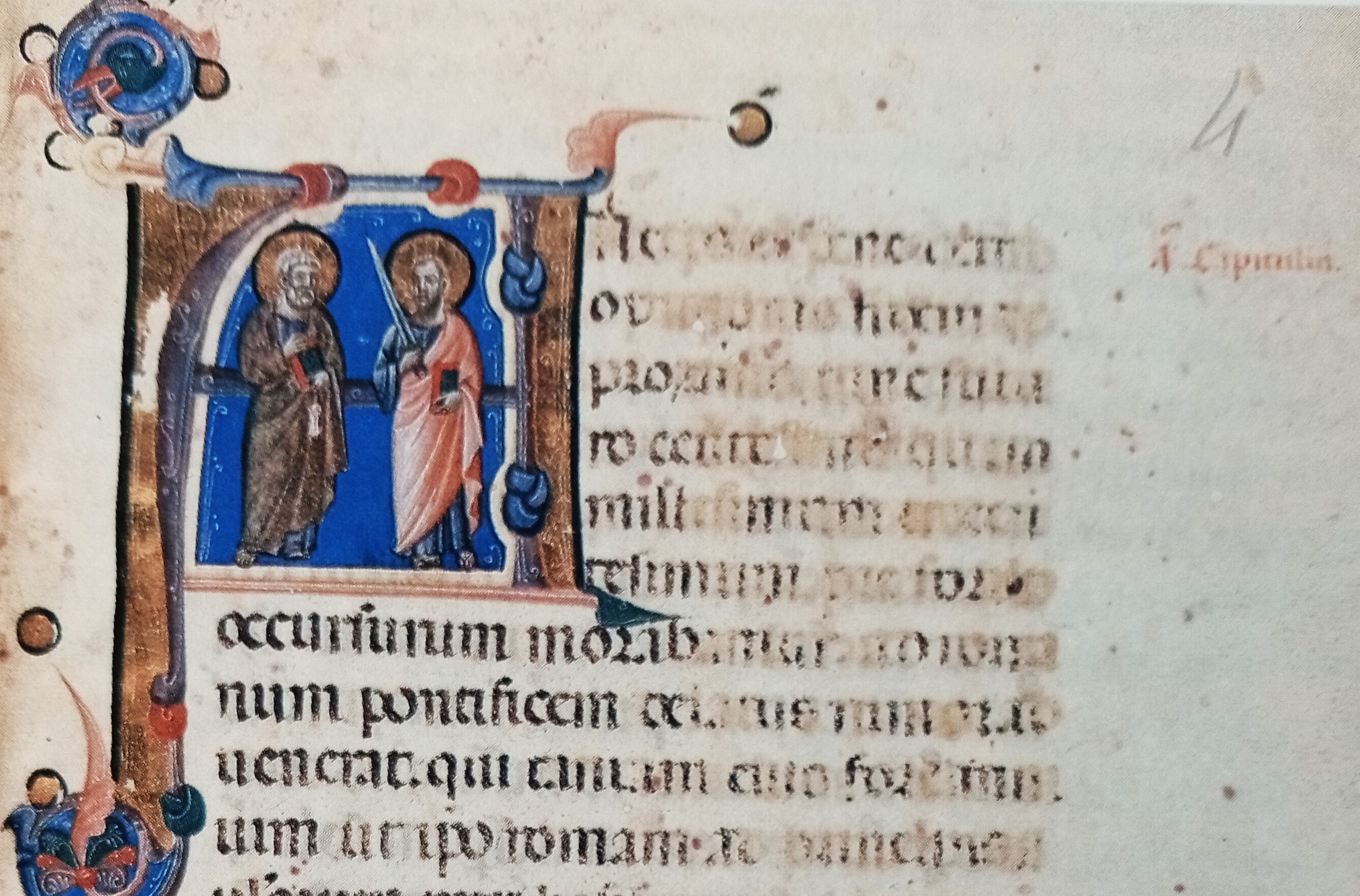
The first Jubilee took place in 1300 under Pope Boniface VIII. It is well known to us thanks to a contemporary text, the Book of the Centenary Year or Jubilee, written by Cardinal Jacopo Stefaneschi. He tells us that on the last day of the year 1299, a rumor spread among the Romans that all those who visited St. Peter’s Basilica would get a full indulgence for the sins committed, and this was because of the centenary year. A very large number of people then flocked to the basilica throughout the evening of December 31. And this continued during the months of January and February, including many pilgrims from neighboring countries. All this under the astonished gaze of the Pope ! What to do ?
The text says : "Boniface VIII, unwilling to oppose popular piety, consulted the college of cardinals on the question of the centenary year and, having obtained a favorable opinion thanks to the merits of the apostles, ordered the preparation of a text which was published on February 22, 1300 in St. Peter’s".
This papal bull declared a jubilee year for the forgiveness of sins. The conditions were listed.
PTo receive the plenary indulgence, that is, the total remission of the penalty for the sins committed, the main condition was of course to be truly repentant of one’s faults and to have confessed them. It was also necessary to visit the basilicas of the Holy Apostles Peter and Paul for 15 days for foreigners and for 30 days for Romans.
This is the first Jubilee. Should we wait 100 years for the next one ? Not much chance to participate ! The next jubilee took place already in 1350, and at the end of the 15th century it was extended to every 25 years, as it is today.
Today, what is its meaning and to what action does it invite us ?
We have seen that in Leviticus, the fiftieth year is a jubilee year, a year of special grace. The prophet Isaiah in chapter 61:2 had also announced "a year of favor from the Lord."
Jesus takes up this proclamation at the beginning of his ministry in Nazareth, as St Luke writes (4:16-22).
"The Spirit of the Lord is upon me because the Lord has anointed me to bring glad tidings to the poor. He has sent me to proclaim liberty to captives and recovery of sight to the blind, to let the oppressed go free, and to proclaim a year acceptable to the Lord." And Jesus adds : "Today this Scripture passage is fulfilled in your hearing”.
Jesus owns this prophecy and announces that it is now that it is fulfilled. One could say that Jesus proclaims a Jubilee, a liberation, a forgiveness, a renewal ! For me, this is the profound meaning of celebrating a Jubilee. It is to actualize the Jubilee of Jesus : to proclaim the good news to the poor that we are, our liberation from evil and sin, to give us back our sight on the meaning of life, freedom if we are oppressed by fear, sadness, discouragement or activism, selfishness, ambition.
The Jubilee is therefore above all to fix one’s eyes on Jesus. It is a process of forgiveness and reconciliation, a conversion, to return to the divine Source that flows within us. It is therefore an invitation to draw closer to God.
Three signs can help us :
1. The pilgrimage to Rome
In particular, the pilgrimage to the tombs of the two apostles Peter and Paul. The pilgrimage reminds us that our whole existence is a journey. It is an invitation first of all to return to ourselves in order to connect with the essential, to find in it "the astonishing being that I am" (Ps 138), a tenderly loved child of God ! But it is also an invitation to get out of ourselves, to go into the unknown. We are not alone in our quest, we follow Christ in a gesture of self-denial, simplicity, abandonment and we walk with Christ, in community, in Church.
So, let’s get started ! Even if we are not going to Rome this year, there are jubilee churches in our dioceses.
The Holy Door
One of the strongest symbols of the Jubilee is the opening of the Holy Doors in the main basilicas of Rome. We cross them in a journey of faith and repentance that express the passage from sin and mediocrity to the Lord’s life of grace and to a renewal of faith and love. It is a way of reliving the passage of Easter, of renewing our baptism through Christ who said : "I am the Door".
So let us also pass through a "door", with the desire to enter a little more into the heart of God !
Indulgence
The plenary indulgence is a gift of divine grace, a totally free act of God who forgives us if we sincerely repent.
To receive this indulgence, there are 3 "conditions", attitudes to live in depth :
- First of all, humility, personal contrition for our sins by receiving the sacrament of confession as an encounter with God’s Mercy.
- Secondly, we enter into communion with the community of the Church, participating in Mass and receiving the Body of Christ, praying also for the Pope’s intentions and for the Church.
- Finally, we are asked to concretize our conversion through acts of true charity, through concern for others and for the poor.
So, let us welcome with joy this gift of Mercy and let us live it in gratitude and hope !
Sr. Thérèse Marie Boillat
Rome, Italy
Document(s)

日本語で - jp2_sens_jubile_therese_marie-3.pdf (306.8 kio)
21 mars 2025
Em português - port2_sens_jubileu_therese_marie-3.pdf (545.6 kio)
21 mars 2025
In italiano - it2_sens_jubile_therese_marie-3.pdf (268.7 kio)
21 mars 2025

Des nouvelles du projet intercongrégationnel dominicain en Amazonie (octobre 2026)
Publié le : 3 octobre


Des nouvelles du projet intercongrégationnel dominicain en Amazonie (octobre 2026)
Publié le : 3 octobre