Share
Published : 9 April 2025
Pilgrimage, the Task of a Lifetime (4/4)
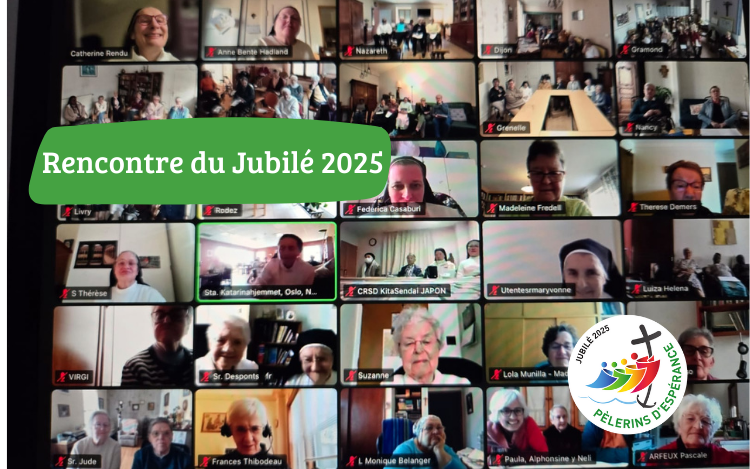


On Saturday, February 15th, the sisters of the Congregation met via videoconference to celebrate the Jubilee Year!
We were more than 160 sisters from a dozen countries.
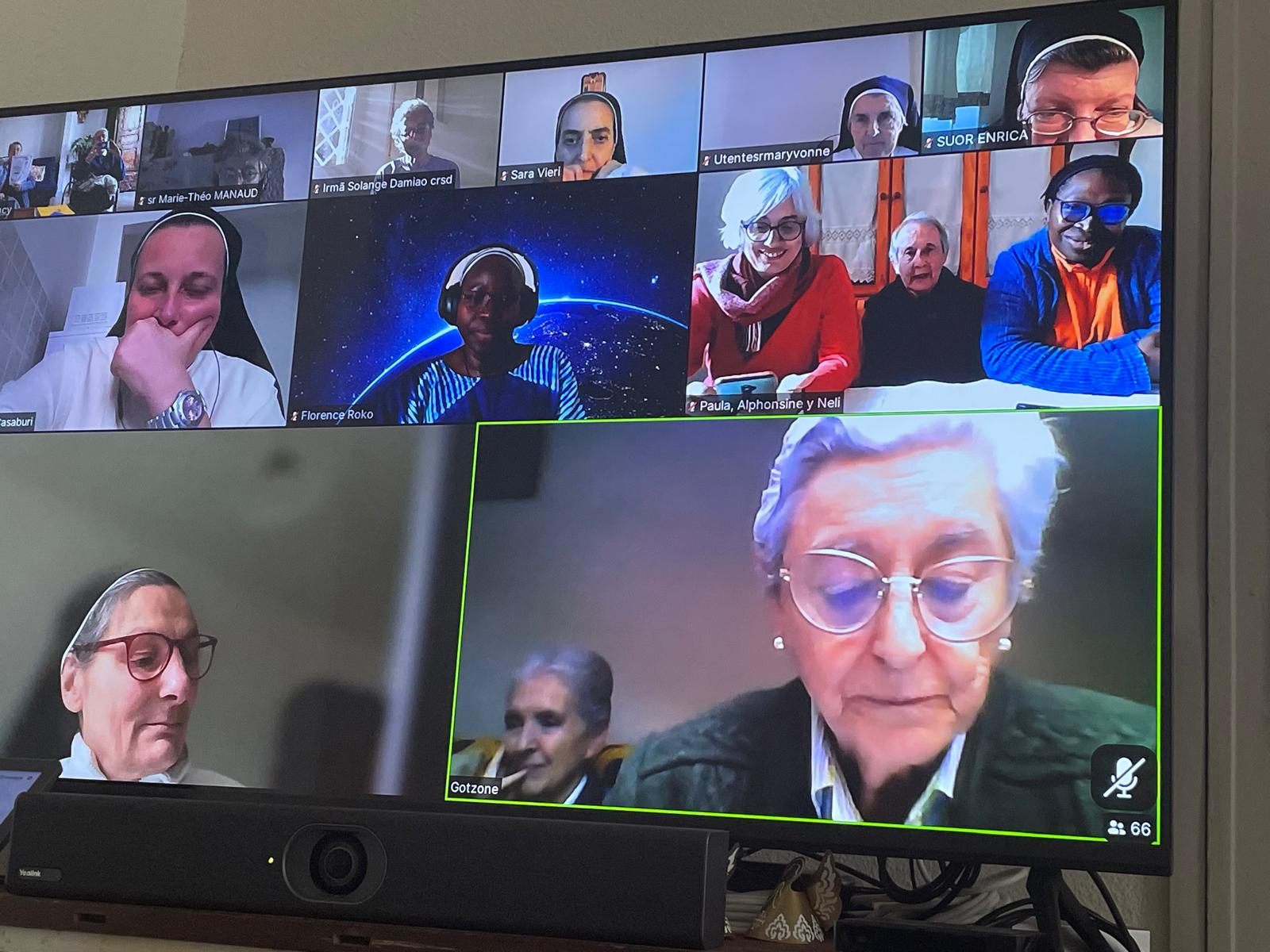
The fourth and final presentation was by our sister Gotzone Mezo Aranzibia from the community of Valladolid (Spain).
Pilgrimage is presented to us as a profound and universal metaphor of human existence that transcends cultures and times. Hontanas, a small village in Burgos located on the Camino de Santiago, is a splendid setting where this experience comes to life. The French Way, with centuries of history, has seen the passage of countless pilgrims from all corners of the world, each one motivated by unique and often inexpressible reasons. Yet they share a common element: a desire to connect with the deepest part of themselves and at the same time with something greater than themselves, a certain yearning for transcendence....
There are so many things that can be said about the Camino... I will simply recall some of them, using the story of a walker whom some of us know, the Jesuit Felix Revilla.
Pilgrimage implies setting aside the routine and ties of daily life. Pilgrims free themselves from the “chains” of tasks that usually absorb them and find a new form of freedom in the simplicity of the everyday. Walking becomes the main objective, and each day is reduced to a few tasks: progressing towards the daily goal, hydrating and feeding oneself and finding a place to rest. This return to basics allows pilgrims to step away from distractions and material concerns and encounter an austere way of life that, paradoxically, is experienced as deeply enriching.
Another valuable characteristic of the Camino is the de-hierarchization of human relationships. Pilgrims leave behind the roles and prejudices that define them in their daily lives. On the Camino, everyone is equal: a businessman, a student, a priest or a teacher share the same path, the same concerns and the same physical pains. This atmosphere of equality and camaraderie fosters human relationships that are free, sincere and devoid of the usual social barriers. The possibility of simply being another person, without labels, is a gift rarely found in modern life.
Detachment from material things also plays a fundamental role in the pilgrim’s experience. In a backpack, preferably a light one, the walker carries the essentials for survival. This austerity, consciously chosen, underlines the connection between the Camino and a more sustainable and planet-friendly way of life.
In addition, the Camino not only challenges the physical limits of pilgrims but confronts them with deep introspection. The long days of walking offer invaluable time for reflection, for facing fears, doubts and desires. Physical pain, fatigue and adversity become opportunities to discover the capacity for personal improvement, that hidden potential that often lies dormant in the comfort of routine.
The Camino, likewise, is an experience of immersion in nature, a reconnection with creation that is increasingly rare in an urbanized world. The changing landscapes, panoramic views and the constant presence of the natural environment provide an ideal setting for contemplation and wonder. It is a reminder of the beauty and grandeur of the world, which we often overlook in our daily lives.
Finally, the Camino is also a journey into the transcendent. In the simplicity of the experience and the detachment from the superfluous, a space opens up for an encounter with God or with that which each pilgrim considers sacred. It is a moment to raise one’s gaze, to be grateful and to find meaning in the physical journey and the spiritual one.
An experience as special as that of a Camino with these characteristics had already been experienced by some of our sisters. And in the context of reflecting on the mission during our 2014 Provincial Chapter, we considered the possibility of undertaking a new mission together in the summer. One sister suggested that we be present somewhere along the Camino de Santiago, with the goal of offering some activity involving welcome, support, help... for pilgrims who would want it as they completed that particular stage of the Camino. We would need an open church building (many are closed along the road), and a place where we could establish our mission.
The work of some of the sisters allowed us to find the right place for this mission the following summer: Hontanas, the little village I mentioned at the beginning of this piece. We started out as four sisters without knowing what we could really do, and the mission took shape in a short time. No great knowledge or great resources were needed.
We offered:
▪ the possibility of guided prayer that would “meet them where they were”;
▪ foot massages, to them offer relief from the hard walking along the road;
▪ a refreshing drink;
▪ the possibility of spontaneous personal or group dialogue;
▪ a contemplative dance of blessing to close the day.
Each of these gestures, seemingly small in itself, could provide immense meaning to those who received it.
Our experience with the pilgrims was a discovery that filled us with wonder and joy. Mysteriously, to a large extent, what the road meant to them ended up becoming what it meant for us as well:
▫ stepping out of our everyday lives in order to find ourselves on the margins of all those things that make up our ordinary experience;
▫ living with sisters and lay people that we do not usually live with, and whom we sometimes do not know;
▫ sharing life, tasks, prayer and, above all, the gift of presence, with the pilgrims.
The latter implies meeting total strangers who are experiencing a special moment of their lives because they are on the Camino; who, in various ways, are able to share what they are living (sometimes with a greater depth than ever before because they are taking the time to find themselves); and who need someone to listen to them, sometimes also to be able to talk about their situation, their discoveries, their sorrows or their joys, their desires and projects... The pilgrims are people we meet one evening, with whom we establish a connection, and who—in all probability—we will never see again.
This is a mission that doesn’t bear any perceptible “fruit,” does not constitute any process, does not have any subsequent follow-up. It consists only of a one-time encounter—sometimes a very intense one because of the dialogue that is generated—but an encounter that ends there.
There are experiences, however, that leave their mark: to be with a person who cannot stop sobbing, who has to speak into a device to translate from Korean to Spanish, and who smilingly shows you a message that says: “Thank you very much, thank you very much, I feel that it is Jesus who cares for and caresses my feet,” is something that goes beyond what one can expect. And we experience the strong presence of the Spirit, who overcomes all our limitations and the barriers of language and culture, and who allows us to know and understand ourselves as brothers and sisters, fellow travelers in search of meaning, responsible for taking care of each other and our world.
Sr Gotzone Mezo Aranzibia
Valladolid, Spain
Document(s)

日本語で - jp4_hontanas_gotzone.pdf (304.5 KiB)
21 March 2025
Em português - port4_peregrino_hontanas_gotzone.pdf (413.1 KiB)
21 March 2025

Des nouvelles du projet intercongrégationnel dominicain en Amazonie (octobre 2026)
Published : 3 October


Des nouvelles du projet intercongrégationnel dominicain en Amazonie (octobre 2026)
Published : 3 October